Nursing Jobs in Scotland 2026: NHS Pay, Health Boards & Visa Guide
Nursing Jobs in Scotland 2026: NHS Pay, Health Boards & Visa Guide
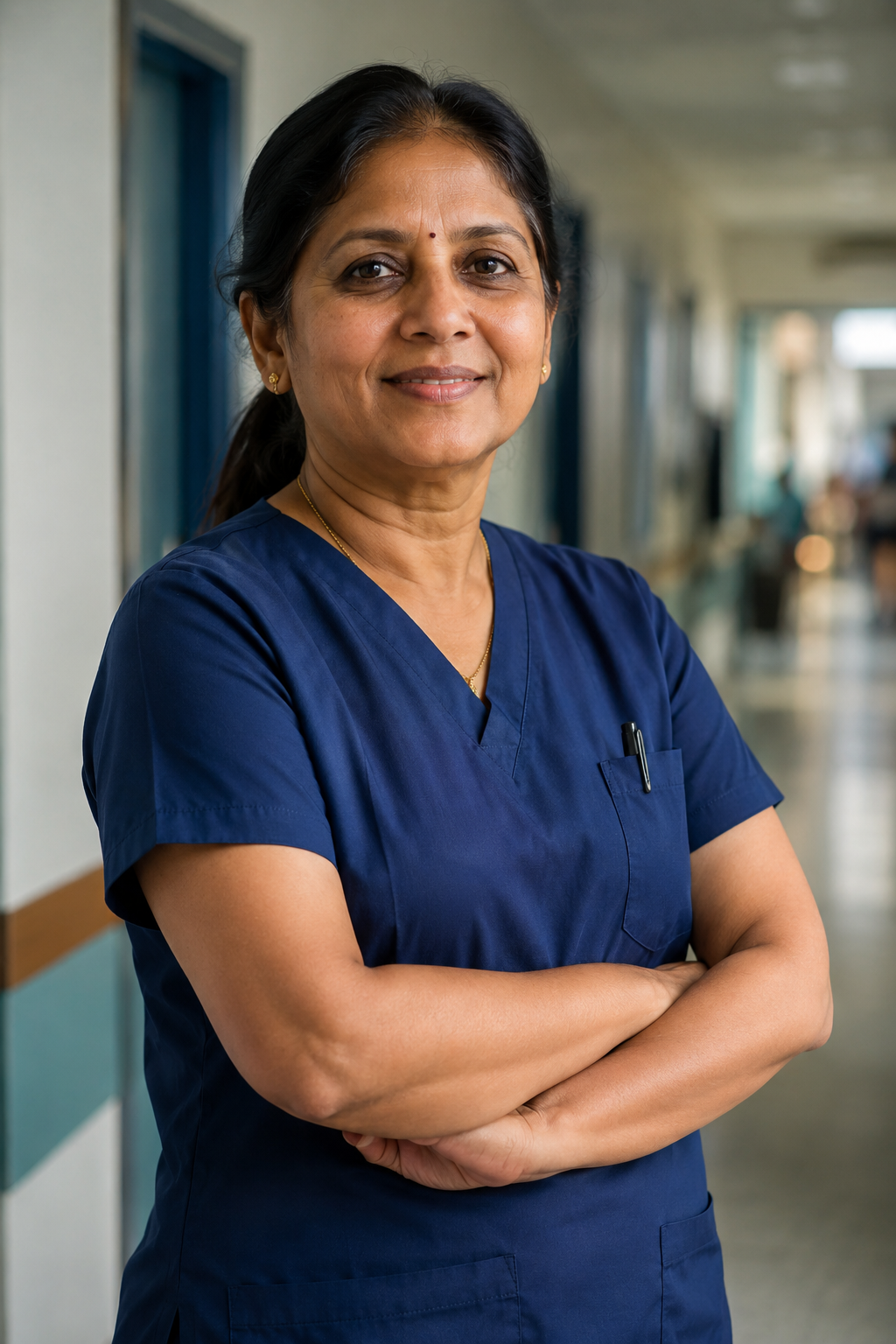
By Abirami Arumugam, RN, Chief Editor, GlobalNurseGuide.com
Scotland pays more than England for NHS nurses. That sentence is accurate and, by itself, incomplete. A Band 5 staff nurse entering NHS Scotland in 2025/26 earns £32,073. England’s equivalent entry point sits at roughly £29,970. The difference is just over £2,100 at entry and widens to nearly £4,000 at the top of Band 5. Scotland also has a confirmed 3.75% increase from April 2026, giving Scottish NHS nurses both a salary premium and a certainty about the next uplift that English colleagues currently lack. But the picture carries a layer most “Scotland is hiring” content leaves out. A nurse planning a move on the salary headline alone will miss it. Read this first.
What Scotland actually pays in 2025/26 and 2026/27
NHS Scotland uses the Agenda for Change framework, the same as the rest of the UK, but negotiates separately with Scottish trade unions through the Scottish Government. The two-year deal signed in 2025 covered both pay years at once. No other UK nation achieved that level of certainty for the same period.
🩺 Join FREE WhatsApp Channel for Trusted Guide
Get weekly vacancy alerts, EB-3 visa updates & daily NCLEX prep on WhatsApp — FREE.
📲 Follow the ChannelThe April 2025 increase was originally set at 4.25%. CPI inflation averaged 3.4% in 2025, triggering the one-percentage-point guarantee written into the deal, so the actual increase rose to 4.4%. The 3.75% increase from April 2026 stands locked in.
Band 5 staff nurse salary for 2025/26:
£32,073 at entry, rising to £39,043 at the top of the standard scale. The hourly rate on a standard 37.5-hour week is £17.26. NHS Scotland will transition to a 36-hour standard working week from April 2026.
Band 6 senior staff nurse: £39,959 to £48,117 in 2025/26.
One feature of the Scottish system matters specifically for international nurses comparing destinations. There is no London weighting equivalent. NHS Scotland pays identical rates at every health board regardless of location. A Band 5 nurse at NHS Highland in Inverness earns exactly the same as a Band 5 nurse at NHS Lothian in Edinburgh.

The Scottish income tax reality, stated plainly
Scotland uses a six-band income tax structure instead of the three-band system England, Wales, and Northern Ireland apply. Scotland adds Starter, Intermediate, and Advanced bands that change the tax position of many NHS employees.
The intermediate rate of 21% begins at £25,688 in Scotland. England’s 20% basic rate covers a wider range before stepping up. Scotland’s higher rate applies from £43,663, compared to £50,270 in England. A Band 5 nurse at the top of scale earning £39,043 falls below the Scottish higher rate threshold, but the effective marginal rate differs from England at the same income point.
Net take-home for a Band 5 nurse in Scotland is still better than in England in absolute terms. The gross premium is large enough to survive the tax difference at Band 5 and Band 6 levels. At Band 8 and above, the Scottish advanced and top rates reduce the advantage more substantially.
The 14 health boards: how hiring actually works
NHS Scotland is not one employer. It operates through 14 territorial health boards that hire independently, each covering a specific geographic area. Vacancy levels, recruitment activity, and the pace of international applications vary significantly across these boards.
NHS Greater Glasgow and Clyde is the largest health board, covering Glasgow and the surrounding areas. Edinburgh and the Lothians fall under NHS Lothian. Aberdeen and Aberdeenshire are served by NHS Grampian. Dundee, Perth, and Angus belong to NHS Tayside. Inverness and the Highlands come under NHS Highland, geographically the largest board but the least densely populated. The remaining boards cover Lanarkshire, Ayrshire and Arran, Fife, Forth Valley, Borders, Dumfries and Galloway, Western Isles, Orkney, and Shetland.
Each board maintains its own recruitment portal and its own international recruitment activity. A vacancy at NHS Grampian is a separate application from one at NHS Lothian. Nurses applying internationally should search across multiple board sites rather than treating NHS Scotland as a single posting board.
What the vacancy data actually shows
The Royal College of Nursing Scotland published its nursing workforce report in 2026, drawing on data through December 2025. The overall NHS Scotland vacancy rate for nursing sat at 4.1%. Band 5 posts showed a 3.6% vacancy rate; Band 6 posts registered 3.4%.
Scottish health boards recorded 333,296 unfilled nurse and midwife shifts across 2024. That averages more than 900 shifts per day. NHS Greater Glasgow and Clyde alone spent £148.1 million on bank and agency workers in a single 12-month period. The RCN Scotland’s 2025 statement was direct: at no point in the 12 months to May 2025 had NHS Scotland employed the nursing staff numbers needed to deliver safe and effective care.
Nursing vacancies across Scotland stood at approximately 2,500 in early 2026. The figure peaked at around 4,000 in 2023 and has fallen, but the shortfall remains real.
The nuance that salary articles miss
BBC Scotland and the Scotsman reported something worth understanding in 2024. Newly qualified paediatric nurses from Glasgow Caledonian University received word from NHS Greater Glasgow and Clyde that no jobs were available for their cohort. The health board simultaneously reported hundreds of open vacancies. The RCN called it a failure of workforce planning.
The contradiction has a specific explanation. NHS Scotland’s vacancies concentrate in adult nursing, older adult care, mental health, and remote and rural settings. Certain paediatric specialties in particular health board areas saw a temporary oversupply of newly qualified domestic graduates relative to available posts.
The picture for internationally educated nurses with experience in adult nursing, medical-surgical wards, ICU, or mental health is different. The shortfall in experienced adult nursing staff is what drives the international recruitment programmes health boards actively maintain.
Visa and sponsorship pathway for international nurses
All 14 territorial NHS Scotland health boards hold active Home Office sponsor licences. Registered nurse roles across all specialties qualify for the Health and Care Worker Visa. Band 2 healthcare support worker roles do not qualify for sponsorship. Care worker roles closed to new overseas applicants in July 2025. The registered nurse sponsorship route remains fully open.
No NHS board can issue a certificate of sponsorship before you obtain NMC registration. The certificate confirms a named qualified professional into a specific role. NMC registration for internationally educated nurses takes between three and six months, depending on the nurse’s home country and whether an OSCE is required.
NHS Scotland boards cannot actively recruit nurses from countries on the red list. The Scottish Code of Practice for the International Recruitment of Health and Social Care Workers mirrors UK Code of Practice requirements on ethical recruitment.
Scotland actively recruits from India, the Philippines, Nigeria, Kenya, and Nepal, among other countries. Recruitment agencies operating in those countries must work within the ethical recruitment framework.
The OSCE and English language requirements
You need NMC registration before any NHS Scotland board can issue a sponsorship certificate. The registration pathway for most internationally educated nurses includes supervised practice under temporary registration and an Objective Structured Clinical Examination.
The OSCE changed in February 2026, adding six new stations covering DVT assessment, TEDS stockings, and pre-operative safety checklists. Nurses starting the NMC journey in 2026 will sit the updated 23-station format. Several NHS Scotland boards cover OSCE costs and preparation support within their international recruitment packages. Confirm whether that applies to your specific offer before accepting.
English language requirements for NMC registration are IELTS Academic 7.0 overall with 6.5 in each component, or the OET equivalent. India and the Philippines do not qualify for an English language testing exemption. The OET versus IELTS comparison on this site covers which test is more accessible for nurses from specific clinical backgrounds.
What is genuinely different about nursing in Scotland
Nursing in Scotland is NHS nursing, but several practical differences affect daily working life.
The staffing legislation England doesn’t have
The Health and Care (Staffing) Scotland Act 2019 requires health boards to have regard for safe staffing levels in workforce planning. This is not a mandatory nurse-to-patient ratio of the kind California operates. It is, however, a statutory obligation with no direct equivalent in England, and its presence in Scottish law shapes how boards approach staffing decisions at least on paper.
Remote and rural nursing
NHS Highland, NHS Western Isles, NHS Orkney, and NHS Shetland post nurses into settings where one clinically trained person may be the only healthcare professional available to a community for extended periods. The RCN’s remote and rural nursing framework addresses these roles specifically. Some boards attach Recruitment and Retention Premiums to rural posts. The clinical responsibility is a different character from acute hospital nursing in a city.
Cities: what Edinburgh, Glasgow, and Aberdeen actually cost
Edinburgh carries rental costs closer to London’s pressure than most English regional cities. Glasgow is more affordable and holds the larger NHS infrastructure across multiple hospitals. Aberdeen runs on a North Sea oil economy with its own cost profile. Dundee and Inverness offer lower living costs but fewer services and social infrastructure for international arrivals building a new network.
Scotland’s standard of living advantages that attract international attention, including free prescriptions and historically free university tuition for Scottish residents, do not change your financial position as a newly arrived internationally educated nurse on a Health and Care Worker Visa. They are background facts about the country, relevant to everyday costs rather than to your nursing income calculation.
Twenty-six years in hospital nursing shapes how you read vacancy data. One pattern holds across different systems: nursing shortages are real at the system level while individual health boards make locally-driven decisions that can produce situations where Glasgow simultaneously spends £148 million on agency staff and turns away new domestic graduates. The internationally educated nurse looking at Scotland should target boards with active international recruitment programmes rather than assuming all 14 boards are equally ready to move. NHS Grampian, NHS Tayside, and NHS Highland have run the most documented international outreach. NHS Greater Glasgow and Clyde has the most posts and the most organisational complexity.
Frequently Asked Questions
Does Scotland pay NHS nurses more than England?
Yes, at every band. Band 5 entry in Scotland is approximately £2,100 more per year than England in 2025/26. At the top of Band 5, the gap grows to nearly £4,000. Scotland’s two-year deal also confirms a 3.75% increase from April 2026, while England has not formally agreed its equivalent increase. The Scottish income tax structure differs from England, but a Band 5 nurse in Scotland still takes home more in absolute terms.
Does Scotland have London weighting for nurses in Edinburgh?
No. NHS Scotland pays uniform rates across all 14 health boards regardless of city. A Band 5 nurse in Edinburgh earns the same as one in rural Argyll. There is no city-specific supplement equivalent to England’s High-Cost Area Supplement.
Which NHS Scotland health boards recruit most actively from abroad?
All 14 boards hold sponsor licences, but NHS Grampian, NHS Tayside, NHS Highland, NHS Lothian, and NHS Lanarkshire have the most documented international recruitment activity. Apply directly through each health board’s own recruitment portal rather than waiting for centralised NHS Scotland-wide listings.
Do I need to complete the NMC OSCE before starting work in Scotland?
Yes. NMC registration is required before any NHS Scotland board can issue a Certificate of Sponsorship. The OSCE is part of the registration pathway for most internationally educated nurses. The format changed in February 2026, adding six new stations. Some boards cover OSCE costs within their international recruitment packages; confirm what your specific employer offers before accepting any offer.
Is the Health and Care Worker Visa still available for nurses going to Scotland?
Yes. Scotland operates under the same UK Home Office immigration framework as England and Wales. Registered nursing across all adult and specialty areas qualifies for the Health and Care Worker Visa. Band 2 support worker roles and care worker roles closed to new overseas applicants in July 2025. Registered nurse posts are unaffected.
Sources: Scottish Government, NHS Staff Pay, gov.scot, Pay Agreement 2025 to 2027; NHS Scotland Agenda for Change Pay Scales 2025/26, Circular PCS(AFC)2026/1; Royal College of Nursing Scotland, The Nursing Workforce in Scotland 2026; Royal College of Nursing Scotland Vacancy Data December 2025; UK Home Office, Health and Care Worker Visa; Nursing and Midwifery Council.
Disclaimer: This article is for informational purposes only. It does not constitute immigration, financial, or legal advice. NHS Scotland pay scales, tax rates, visa rules, and health board hiring practices are subject to change. Verify current figures directly with the Scottish Government at gov.scot, the relevant NHS Scotland health board, and the UK Home Office before making career decisions. Tax calculations reflect 2025/26 Scottish income tax bands and will change in future years. Information current as of July 2026.
Author
Discover more from Global Nurse Guide
Subscribe to get the latest posts sent to your email.