NLC Map 2026: The 43 States Where You Can Work with One License (PA & CT Update)
NLC Map 2026: The 43 States Where You Can Work with One License (PA & CT Update) (Travel Nurses and Staff Nurses looking to move or pick up remote work.)
Last verified: July 2, 2026
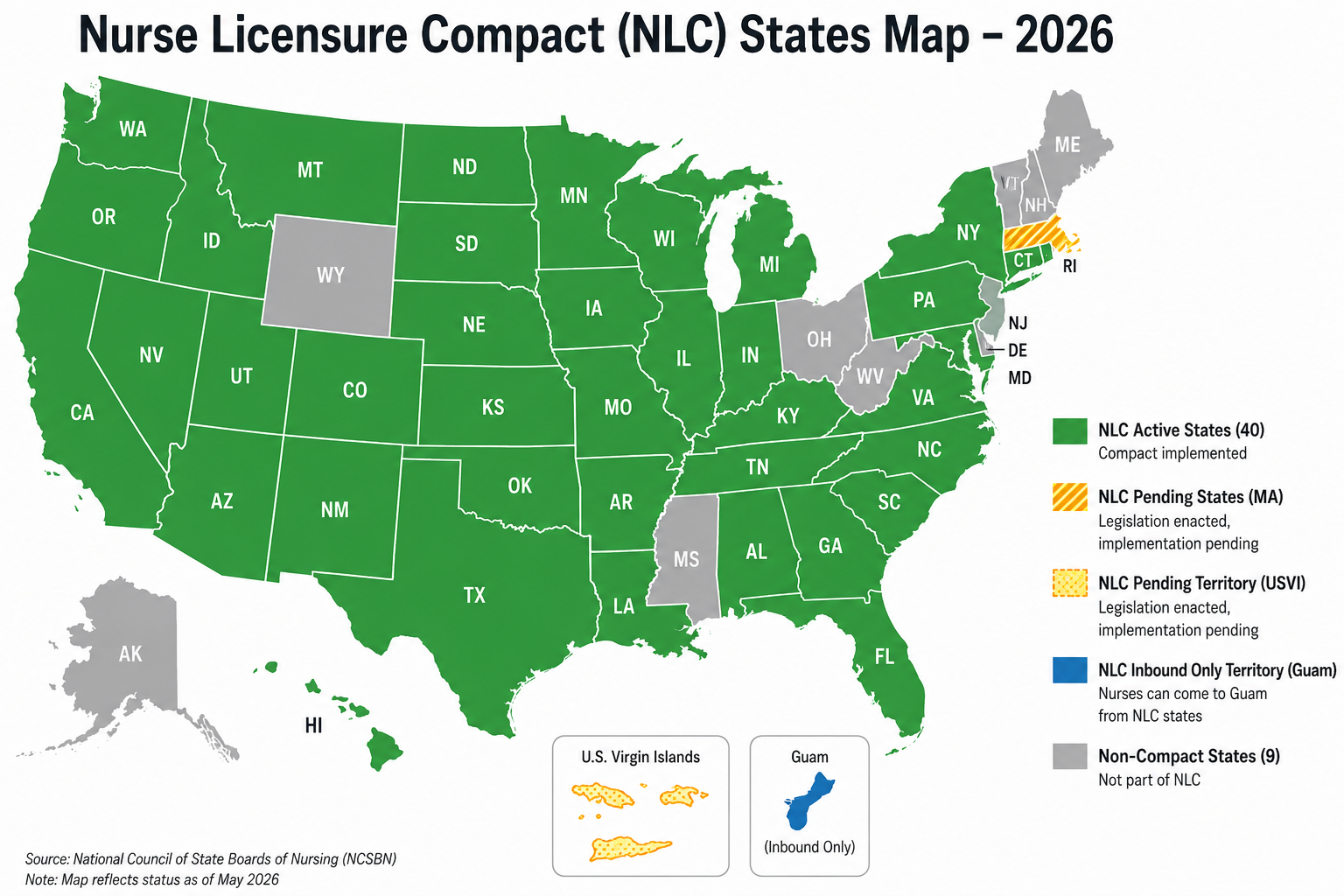
As of 2026, there are 43 jurisdictions currently enacted in the Nurse Licensure Compact (NLC). This network allows nurses to hold one multistate license (MSL) in their Primary State of Residence (PSOR) and practice in all other compact states without obtaining additional licenses.
🩺 Join FREE WhatsApp Channel for Trusted Guide
Get weekly vacancy alerts, EB-3 visa updates & daily NCLEX prep on WhatsApp — FREE.
📲 Follow the ChannelThe 2026 map includes the major additions of Pennsylvania and Connecticut, significantly opening up the Northeast for travel nurses — and 40 of the 43 jurisdictions are now fully active, not just enacted on paper.

What are the compact nursing states:
Category A: Fully Active NLC States
Nurses with a multistate license can practice in these states immediately.
| West / Midwest | South / Southeast | Northeast / Mid-Atlantic |
|---|---|---|
| Arizona | Alabama | Delaware |
| Arkansas | Florida | Maine |
| Colorado | Georgia | Maryland |
| Idaho | Kentucky | New Hampshire |
| Indiana | Louisiana | New Jersey |
| Iowa | Mississippi | Rhode Island |
| Kansas | North Carolina | Vermont |
| Missouri | South Carolina | Virginia |
| Montana | Tennessee | West Virginia |
| Nebraska | Texas | Pennsylvania |
| New Mexico | Oklahoma | Connecticut |
| North Dakota | ||
| South Dakota | ||
| Ohio | ||
| Utah | ||
| Washington | ||
| Wisconsin | ||
| Wyoming |
Correction from earlier version: Ohio and Washington were named as fully active in the text but missing from this table. Both are added above — this brings Category A to the correct count of 40 states.
Category B: New & Notable (Recent Additions)
These states have recently joined or fully implemented the compact, changing the landscape for 2026.
- Pennsylvania: Fully implemented. Nurses can now hold PA multistate licenses, and incoming compact nurses can work there freely.
- Connecticut: Fully implemented. The state began issuing multistate licenses and accepting compact privileges on October 1, 2025.
- Washington: Implementation is fully stabilized; began issuing MSLs in early 2024.
- Ohio: Fully active; implementation began Jan 1, 2023.
Category C: Enacted but Awaiting Implementation
These jurisdictions have passed the law, but you cannot yet use a compact license to work there (with the exception of Guam for incoming nurses).
- Massachusetts: Signed into law November 20, 2024. As of mid-2026, still not operational. The Board of Registration in Nursing’s original 12-month implementation estimate has passed; the current holdup is obtaining federal FBI background-check authorization, which BORN has said was never included in that original timeline. No new target date has been published. What you can do now: Massachusetts offers an expedited “conditional approval” pathway for nurses seeking reciprocal licensure while implementation is pending — apply for this now rather than waiting for full NLC status. Nurses from other compact states still cannot use an out-of-state MSL to practice in MA until implementation completes.
- Guam: Partial implementation. Incoming nurses with a valid MSL can practice in Guam. However, Guam residents cannot yet obtain an MSL.
- U.S. Virgin Islands: Enacted but awaiting implementation.
Watch list — verify before relying on this: Some 2026 industry trackers now list Michigan and Minnesota as having enacted NLC legislation pending implementation, which would move them out of the Holdouts list below. Other legislative-tracking sources describe Michigan’s bill as still contested and unsigned. This is a live discrepancy between sources as of this writing — confirm directly against nursecompact.com or your state board before treating either state as enacted.
Status Table: The Transition States
Navigating the “New” and “Pending” states is the most confusing part of the 2026 map. Use this table to determine your status.
| State | Status (mid-2026) | Effective Date | Can Incoming Travelers Work Here? | Can Residents Apply for MSL? |
|---|---|---|---|---|
| Pennsylvania | Active | July 7, 2025 | YES | YES |
| Connecticut | Active | October 1, 2025 | YES | YES |
| Massachusetts | Implementation Phase — delayed past original estimate | No confirmed date | NO (Must hold MA license; conditional approval available) | NO |
Visual Element Description
Visual Guide:
- Green: All 40 fully active jurisdictions (includes PA, CT, WA, OH).
- Striped/Yellow: Massachusetts and USVI (enacted but pending).
- Blue: Guam (partial/inbound only).
- Grey: Non-compact “Holdout” states.
5. The “Holdouts” (Where you need a separate license)
You cannot work in these states with a compact license. You must apply for licensure by endorsement.
- California: Still a single-state license. Processing times are roughly 10-12 weeks.
- New York: Still single-state. Senate Bill S3916 remains parked in the Senate Higher Education Committee — no floor vote as of mid-2026. Primary opposition comes from the New York State Nurses Association, which argues compact recognition would lower NY’s coursework standards.
- Illinois: Still single-state. House Bill 1706 introduced Jan 2025; no floor action reported.
- Michigan: Single-state, though see the watch-list note above — legislative status is contested between sources.
- Nevada: Still single-state.
- Oregon: Still single-state.
- Alaska: Still single-state. Governor Dunleavy has reintroduced legislation (HB 131, SB 124) to join the compact.
- Hawaii: Still single-state.
6. The “60-Day Rule”
Strict enforcement of residency rules began in 2024.
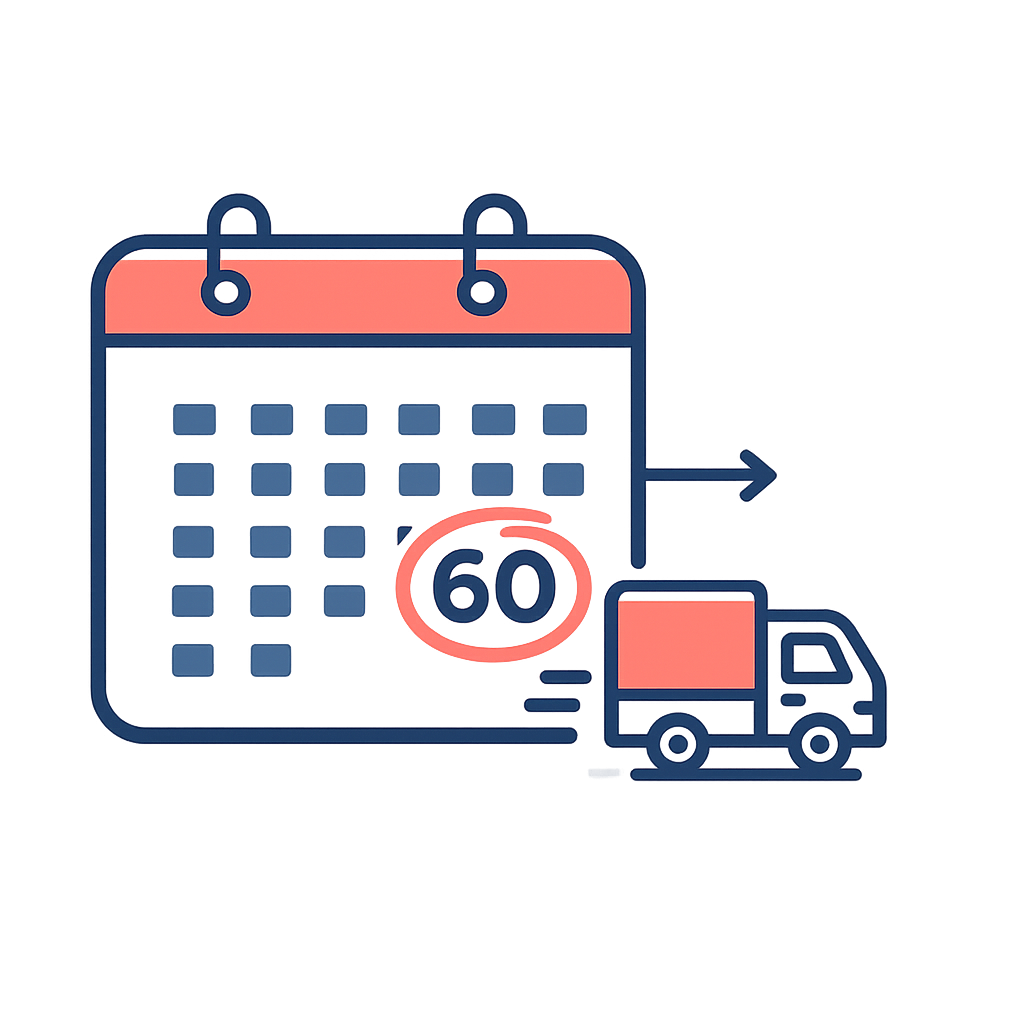
- The Rule: If you move your Primary State of Residence (PSOR) from one NLC state to another, you have 60 days to apply for a new license by endorsement in your new home state.
- The “Trap”: You cannot simply keep your old home state’s license indefinitely. Once you establish legal residency (driver’s license, voter registration, taxes) in a new state, your previous license is technically no longer a valid multistate license for that residency.
- Action Item: Apply for your new home state license immediately upon relocation. You can continue to work on your former license during the application processing period, provided you applied within the 60-day window.
7. Travel Nurse Tips
- Non-Compact Assignments: If taking an assignment in a “Holdout” state (e.g., California), you must maintain your home state license to keep your compact privileges active. Do not let your home license lapse while working in CA.
- Verify on NURSYS: Always check your license status on NURSYS.com. It must explicitly say “Multistate” to practice across borders.
- Pennsylvania & Connecticut Travelers: Ensure your agency knows that PA and CT are now fully active. You no longer need to pay for single-state licenses there if you hold a valid compact license from another state.
- Massachusetts Travelers: Don’t wait on full implementation — apply for the conditional approval pathway now if you have an assignment lined up there.
Frequently Asked Questions
Q: Is Pennsylvania legally a compact state now?
A: Yes. As of July 7, 2025, Pennsylvania is fully active in the NLC. Nurses residing in PA can now apply for multistate licenses, and nurses with active compact licenses from other states can work in PA immediately without applying for endorsement.
Q: How many states are in the Nurse Licensure Compact (NLC) in 2026?
A: As of mid-2026, there are 43 jurisdictions in the NLC — 40 fully active states (including Pennsylvania, Connecticut, Ohio, and Washington) and 3 jurisdictions enacted but pending implementation (Massachusetts, USVI, and Guam, which has partial/inbound-only implementation). A small number of additional states have introduced compact legislation that has not yet passed; check NCSBN directly for the latest.
Q: Can I work in Massachusetts with my compact license?
A: Not yet, and not on a confirmed timeline. Massachusetts signed the NLC into law in November 2024 and originally projected roughly 12 months to implementation — that window has passed. The current bottleneck is federal background-check authorization. You must hold a valid single-state MA license to work there, though the state’s conditional-approval pathway can speed up a standard MA license application while you wait.
Q: What happens to my license if I move to another compact state?
A: Under the NLC “60-Day Rule,” you have 60 days from the time you establish residency (e.g., get a driver’s license) in a new NLC state to apply for licensure by endorsement. You cannot permanently reside in one compact state while using a license from your previous state.
Q: Is California part of the Nurse Licensure Compact in 2026?
A: No. California is not a member of the NLC. To work in California, you must apply for a single-state license by endorsement. Processing times for CA licenses can take 10–12 weeks.
Q: Is New York close to joining the compact?
A: Not currently. S3916 has been reintroduced in consecutive legislative sessions and has not advanced past committee, largely due to opposition from the New York State Nurses Association over coursework-standard concerns. Treat New York as a long-term holdout rather than a near-term addition.
Author

Discover more from Global Nurse Guide
Subscribe to get the latest posts sent to your email.